Loading…
Skip to content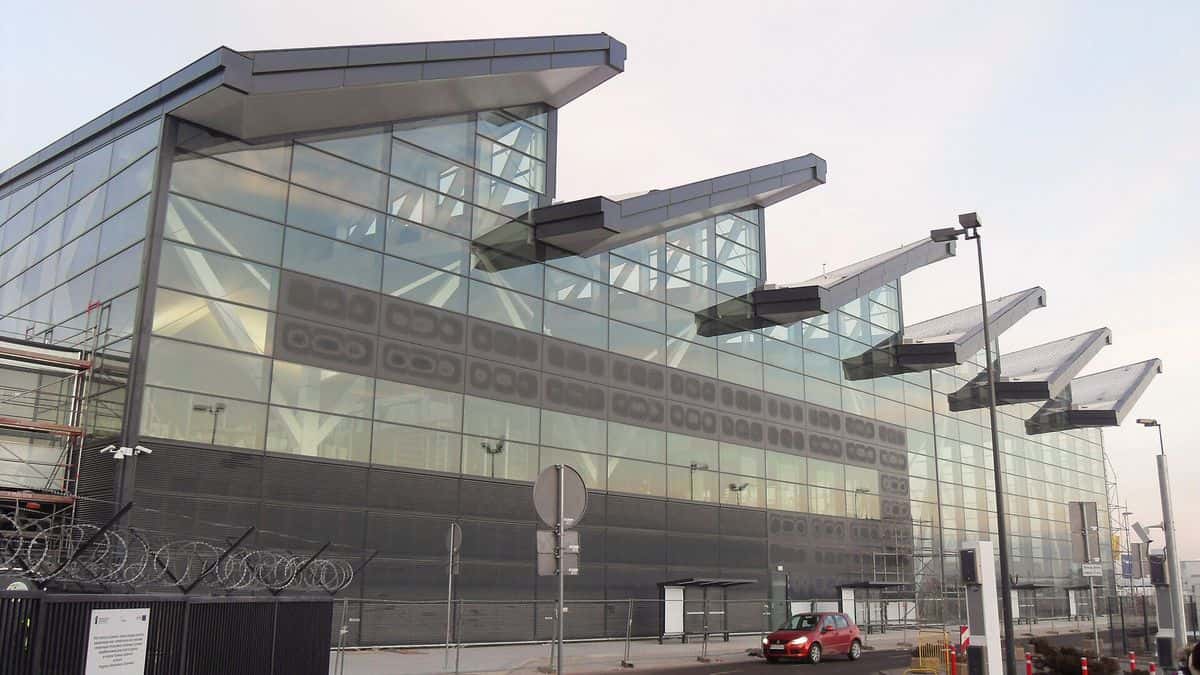
Parking at Gdańsk airport
No dates selected
We have no car parks here yet. Look at the nearest airports below.
Rębiechowo serves the whole Tricity, so drivers come in off the ring road and from Sopot, Gdynia and Kashubia.
No car parks at this airport yet
We are working on it. Have a look at car parks near other airports — we cover every airport in the country.
Gdańsk airport (GDN) sits in Rębiechowo on the western edge of the city and serves the whole Tricity, so drivers come in from the ring road and from Sopot, Gdynia and Kashubia alike. For anyone parking that means two things: the lots stand on approach roads from several directions, and in the summer peak you are competing for a space with passengers from the whole region. Below are the car parks around Rębiechowo and what is worth knowing before you drive.
How to reach Gdańsk airport
Driving to Gdańsk airport
The airport address, ul. Słowackiego 200, doubles as a driving hint. Słowackiego is provincial road 472 and runs from the Gdańsk Wrzeszcz district directly to the terminal, which makes it the natural approach from central Gdańsk and from Sopot. From Gdynia you take the Tricity ring road, part of the S6 expressway, and leave it at the Matarnia junction.
Traffic from Kashubia and southern Gdańsk is fed in through the Karczemki junction, while longer drives reach the region on the S7 or the A1. The ring road rather than the final kilometres decides your timing, so allow more slack coming from Gdynia at rush hour. The airport also co-finances access roads to the Tricity Metropolitan Ring Road, which will eventually spread this traffic wider than it is spread today.
By train to Terminal 2
The station stands on a viaduct next to Terminal 2, joined to it by a covered footbridge entered from inside the building. It opened on 1 September 2015 with line 248 of the Pomeranian Metropolitan Railway between Gdańsk Wrzeszcz and Gdańsk Osowa, making Gdańsk the fourth Polish airport with a rail link to the city centre.
Four services have called there since 11 December 2022: direct trains to Sopot and Gdynia, some via Osowa, and inland to the Kashubian towns of Kartuzy and Kościerzyna. For Gdańsk Główny and the old town you change at Wrzeszcz onto the SKM city railway, which makes the train a better fit for Kashubia and the northern Tricity than for the city centre itself.
Buses 110, 210 and N3
The bus stop sits opposite the terminal: line 110 comes from the railway station in Gdańsk Wrzeszcz, line 210 from Gdańsk Główny, and the night line N3 runs between 23:00 and 4:00 — the window in which some of the summer charters depart. If you are collecting someone on a night landing, check whether their flight falls inside that window before you get in the car.
Arriving via road 472
The airport lies in the Matarnia district, historically Rębiechowo, which is where its former name came from and why the old name still turns up in conversation and on older maps. The last stretch runs on a single axis: Słowackiego leads to the terminal, and the airport zone signage only begins at the building itself.
Sites taking cars for the length of a trip occupy the built-up parts of Matarnia and Rębiechowo; you turn off to them before the zone in front of the terminal, not after it.
Departures and arrivals doors
Passenger traffic goes through one terminal, but departures and arrivals have separate doors, and it is those rather than the building name that decide where the shuttle should stop. On the way out you get dropped on the departures side; coming back you walk out of arrivals on the other face of the building. Agree the pickup point with the crew before you fly, because both sides are busy and the shuttle bays there are short.
If you are coming back on a late flight, check whether the site runs its transfer around the clock. Gdańsk has plenty of night arrivals, and the difference between a site staffed non-stop and one with an operating window is the difference between a short wait and a taxi. The cards below show what each one declares.
Summer on the coast
Rębiechowo works to a distinctly seasonal rhythm. Charters and holiday traffic from across Pomerania arrive between June and August, and the lots around the airport fill days ahead of a weekend. Off season it loosens up, though in winter part of the capacity goes to cars standing longer, because the Tricity flies away for longer trips then.
Weather is the second factor. A coastal winter means road salt and wind, and a car left for a week on an open site comes back dirtier than it would outside your block. If that matters to you, look for a roofed site or one offering a wash among its extras — both are visible on the cards below.
Airport zones and private lots
The airport runs several zones of its own, numbered from the one nearest the terminal outwards, and it is the number rather than the name that tells you the distance. The nearest zones are convenient for a short stop or for collecting someone; over a week their daily rate starts to bite.
The private sites nearby play it the other way round: further from the terminal, cheaper per day, with the shuttle either included or charged separately. For a week or more they usually come out ahead, and all you really give up is a short ride each way. For a two-day trip the gap can be small enough that pulling up at the terminal is simply easier.
Paying and booking
You pay for the booking online, at the moment you make it. BLIK, a payment card and an instant bank transfer are all accepted, the same methods you know from online shops. None of them costs more than the others, and there is no extra deposit collected at the barrier.
You pay the car park's price, with no booking or service fee. The price shown when you book is the final price for the whole stay. It covers the space and the transfer where the operator includes it in the rate; extra services are your own choice and appear as separate lines on the receipt. Once paid, you get an e-mail confirmation with a booking number, and that is your document on arrival.
Free cancellation runs until the cut-off set by the car park operator. You can see that cut-off on the car park's page before you pay. After a cancellation the money travels back the way it came, to the account or the card used at checkout.
What a secure lot means
"Secure" is a set of specifics, not a slogan. CCTV means cameras covering the bays, not just the gate. Fencing means an enclosed site with a controlled entrance. Lighting decides whether picking your car up at night is pleasant. The operator's policy defines what he answers for and what your own insurance covers, so ask about its scope before you leave the car.
Car keys are a separate question. Some lots ask you to leave them so they can shuffle cars on a tight site, others never touch the vehicle. Both practices are normal, but they differ in consequences: if the keys stay, take your documents and your garage remote out of the car, and leave the glovebox empty.
Getting the car ready
Take out everything valuable or personal: the laptop, documents, chargers, the road-toll device. In winter, top up the battery and switch to winter screen wash, because a car standing in frost for a week starts worse than one driven daily. In summer, park away from direct sun on the dashboard if the lot lets you choose.
Check your car's height if you drive a van, an SUV with a roof box or a bike rack on the roof. Multi-storey car parks at the terminals have a height barrier, and a taller car simply will not fit under it. Open-air lots off the airport grounds usually have no such limit — the car park's page tells you whether it is roofed or open.
Arriving at the car park
On arrival you give your booking number or show the confirmation e-mail. Staff note the registration plate, point you to a bay and, where the lot works that way, take the keys. It pays to enter the plate when booking, because then arriving comes down to the gate opening.
The transfer to the terminal usually leaves right after you park, and you order the return leg by phone once you have your luggage. The number is in the booking confirmation, and it is worth saving it on your phone before you fly, along with the site address — nobody wants to hunt through e-mail after a night landing.
Frequently asked questions
How long is the free Kiss&Fly drop-off at Gdańsk?
The operator of Gdańsk gives you up to 10 free minutes in the Kiss&Fly zone by the terminal; beyond that the airport's own tariff applies (checked on 26 Aug 2026). If you are leaving the car for the trip, Kiss&Fly is not the place for it — the car parks on this page charge a daily rate.
Which road do I take to Gdańsk airport by car?
From central Gdańsk and the Wrzeszcz district, take Słowackiego, provincial road 472, which leads straight to the terminal at ul. Słowackiego 200. From Gdynia, use the Tricity ring road along the S6 and exit at the Matarnia junction. Drivers from Kashubia join through the Karczemki junction, and longer approaches run on the S7 or the A1.
How far is the airport from Sopot, Gdynia and central Gdańsk?
Sopot is about 10 km away and Gdynia about 23 km, while sources give between 10 and 12 km for central Gdańsk. The airport lies in the Matarnia district on the Kashubian upland, historically Rębiechowo, which is where its former name came from. Journey times depend mostly on the Tricity ring road, so allow more slack from Gdynia than from Sopot.
Can I reach Gdańsk old town or Sopot by train after dropping the car?
Yes, and it works best towards Gdynia, Sopot, Kartuzy and Kościerzyna — four services leave from the stop by the terminal. For central Gdańsk itself bus 210 is often simpler, because the train involves changing at Wrzeszcz onto the SKM city railway. Late in the evening the timetable thins out, so for a flight landing after 23:00 the realistic choices are the night bus N3, a taxi, or a car waiting in a car park.
How early should I set off for a flight in the summer peak?
Earlier than in winter. July and August 2025 each pushed over 800,000 passengers through the terminal, against 428,546 in January, so the roads, the car parks and the security queue all work at close to double the winter load. For an August departure, add time for the ring road and for the walk back from wherever you leave the car.
Where do arrivals come out, and how do I get there for a night landing?
Arrivals are handled in Terminal 2, in the area added during the 2014–2015 expansion. Meeting a flight on public transport means watching the clock: line 110 takes about 25 to 35 minutes in from Gdańsk Wrzeszcz, line 210 about 40 minutes from Gdańsk Główny, and the night line N3 covers only the 23:00 to 4:00 window, roughly 20 minutes from Wrzeszcz. A car frees you from that window, which is usually what settles it after a late landing.
Is leaving a car here for two weeks sensible?
It is routine at Gdańsk, where the network is built around week-long and fortnight-long trips to Scandinavia, Britain and southern Europe. Many drivers come from outside the Tricity, with no direct train other than the Kartuzy and Kościerzyna services. For a stay that long, compare whether the bay is covered and how the site copes with winter.
Airports nearby
Warsaw Chopin Airport
20 car parks