Loading…
Skip to content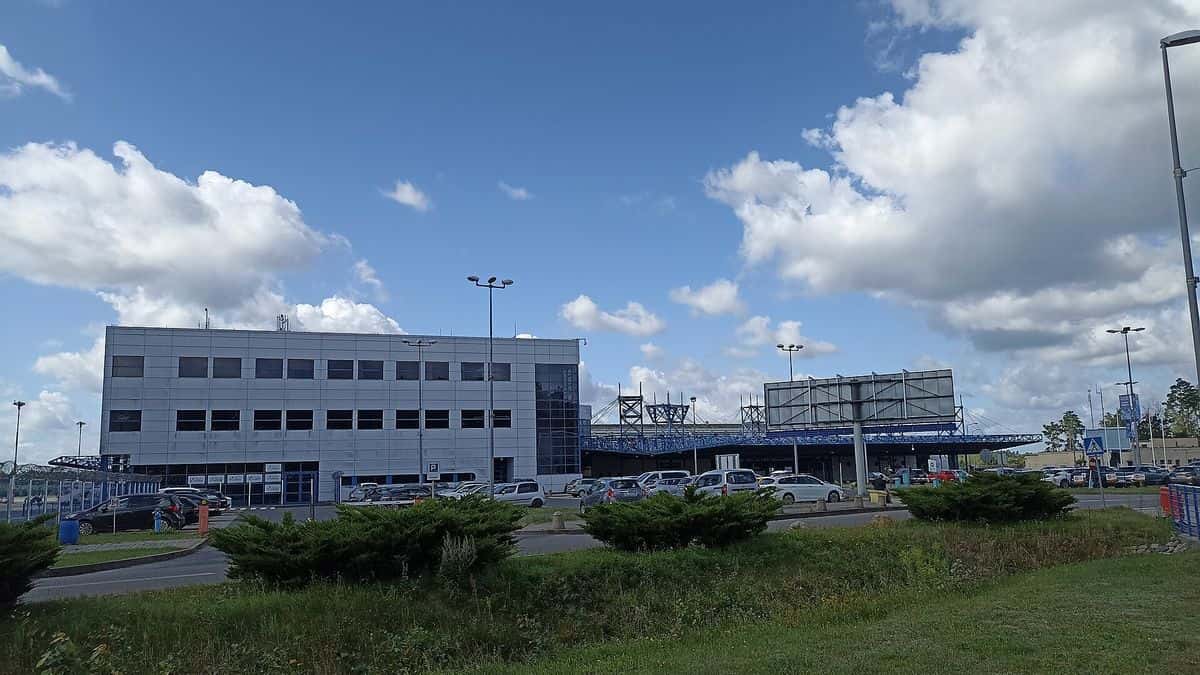
Parking at Szczecin Goleniów airport
Goleniów lies in the middle of forest well north of Szczecin, so the drive in needs planning.
No car parks at Szczecin Goleniów airport yet
The first car park shows up here once an operator lists it. Directions to the airport are below.
You will not get in from the city centre in a quarter of an hour, and the choice of sites is narrower than at the big airports.
How to reach Szczecin-Goleniów airport
Driving to Goleniów
The airport was built between 1953 and 1956 as a military field, and civil traffic moved here from Szczecin-Dąbie in 1967 — which is why the terminal stands out in the countryside rather than on the edge of the city it serves, 45 to 46 kilometres from central Szczecin.
Road access follows the corridor of the S3 expressway between Świnoujście and Lubawka, which runs past both Szczecin and Goleniów; in the north the network ties into the A6 motorway, and at the Goleniów Północ interchange it meets the S6 towards Koszalin and the middle stretch of the coast. The airport operator does not publish a typical driving time to central Szczecin, so plan around the distance itself and leave a margin.
Train and coach to Goleniów
Port Lotniczy Szczecin Goleniów station opened on 9 June 2013 and is joined to the main line by a four-kilometre spur. Direct trains serve Szczecin, Szczecin Dąbie, Kołobrzeg, Koszalin and Słupsk, and a change at Goleniów opens Międzyzdroje, Świnoujście, Kamień Pomorski and Wolin.
Scheduled coaches fill the gaps: PKS Szczecin runs to and from the city for every flight, while Follow me and Air-Transfer, the latter from Koszalin and Kołobrzeg, serve selected departures only. For a dawn flight those timetables rarely line up, which is usually the point at which people decide to drive.
Arriving through Glewice
The airport address is the village of Glewice, five kilometres east of Goleniów. The last stretch is a local road across farmland, and nothing in the landscape announces an airport until the entrance.
Through 2026 and 2027 the terminal layout is temporary, because the rebuild is phased so that traffic never stops, so the walk in from the car parks may change; check the current entrance before you travel. Sites taking cars for longer stand on the Glewice and Goleniów flanks of the airport.
A terminal out on its own
Goleniów has one terminal and next to no development around it, so the sites either stand at the airport itself or along the approach road. The distances between them are short, and shuttles pull up right at the entrance.
The flip side of that location is that there is no fallback here on the way back. If the transfer does not come, the alternatives are a taxi from the terminal or the train into town. So at Goleniów, more than anywhere else, it pays to check that your site covers arrivals at your hour.
The timetable and long stays
Goleniów's schedule is thinner than a large airport's, with departures spread over a few days of the week. The result is an unusual rhythm in the car parks: occupancy jumps with the flights instead of levelling out, so the day you fly decides availability more than the season does.
Stays here run long, because a flight from Goleniów is usually a trip rather than an overnight hop. For a longer stay, check on the card whether the site is fenced and watched — you are leaving the car away from any housing, and that is a real difference between sites.
Paying and booking
You pay for the booking online, at the moment you make it. BLIK, a payment card and an instant bank transfer are all accepted, the same methods you know from online shops. None of them costs more than the others, and there is no extra deposit collected at the barrier.
You pay the car park's price, with no booking or service fee. The price shown when you book is the final price for the whole stay. It covers the space and the transfer where the operator includes it in the rate; extra services are your own choice and appear as separate lines on the receipt. Once paid, you get an e-mail confirmation with a booking number, and that is your document on arrival.
Free cancellation runs until the cut-off set by the car park operator. You can see that cut-off on the car park's page before you pay. After a cancellation the money travels back the way it came, to the account or the card used at checkout.
What a secure lot means
"Secure" is a set of specifics, not a slogan. CCTV means cameras covering the bays, not just the gate. Fencing means an enclosed site with a controlled entrance. Lighting decides whether picking your car up at night is pleasant. The operator's policy defines what he answers for and what your own insurance covers, so ask about its scope before you leave the car.
Car keys are a separate question. Some lots ask you to leave them so they can shuffle cars on a tight site, others never touch the vehicle. Both practices are normal, but they differ in consequences: if the keys stay, take your documents and your garage remote out of the car, and leave the glovebox empty.
Getting the car ready
Take out everything valuable or personal: the laptop, documents, chargers, the road-toll device. In winter, top up the battery and switch to winter screen wash, because a car standing in frost for a week starts worse than one driven daily. In summer, park away from direct sun on the dashboard if the lot lets you choose.
Check your car's height if you drive a van, an SUV with a roof box or a bike rack on the roof. Multi-storey car parks at the terminals have a height barrier, and a taller car simply will not fit under it. Open-air lots off the airport grounds usually have no such limit — the car park's page tells you whether it is roofed or open.
Arriving at the car park
On arrival you give your booking number or show the confirmation e-mail. Staff note the registration plate, point you to a bay and, where the lot works that way, take the keys. It pays to enter the plate when booking, because then arriving comes down to the gate opening.
The transfer to the terminal usually leaves right after you park, and you order the return leg by phone once you have your luggage. The number is in the booking confirmation, and it is worth saving it on your phone before you fly, along with the site address — nobody wants to hunt through e-mail after a night landing.
Frequently asked questions
How far is Szczecin-Goleniów Airport from Szczecin, and which road leads there?
The airport is in Glewice, about 45 to 46 kilometres north-east of central Szczecin and 5 kilometres east of Goleniów. Access follows the S3 expressway corridor, which ties into the A6 motorway in the north and meets the S6 towards Koszalin at the Goleniów Północ interchange. The operator publishes no typical driving time, so plan around the distance and add a margin if you have an early departure.
Can I reach the Baltic resorts from the airport without a car?
Yes, and more easily in season. Trains from the station beside the terminal run direct to Kołobrzeg, Koszalin and Słupsk, and a change at Goleniów reaches Międzyzdroje, Świnoujście, Kamień Pomorski and Wolin. Since 15 May 2025 PKS Szczecin has also run a seasonal coach from the airport to Świnoujście and Międzyzdroje, timed to every flight, while Air-Transfer serves Koszalin and Kołobrzeg on selected departures.
I am crossing from Germany — does driving to Goleniów beat driving to Berlin?
It depends on the route you need. The German border lies five kilometres from the Szczecin city limits and the airport's catchment of some 1.5 to 1.6 million people reaches into Mecklenburg and Brandenburg, so both airports are realistic; scheduled coaches run from Szczecin to Berlin Brandenburg for what SZZ does not serve. When Goleniów has your flight, it is by far the shorter drive, and the car can wait near the terminal.
Is long-stay parking normal at Szczecin-Goleniów?
It is the usual pattern here. With 45 kilometres between the terminal and Szczecin, an airport transfer has to be paid for twice, and the busiest routes — the United Kingdom, Ireland and Norway, plus summer charters to Turkey and Egypt — rarely mean a trip of a few days. For a week or two, check whether a site is fenced and monitored, and in winter whether covered spaces are offered.
The terminal is being rebuilt: what should I expect in 2026 and 2027?
Passenger traffic continues throughout, because the work is phased, but a temporary passenger terminal has been going up on the site since 3 November 2025, the new departures building was due to start in mid-2026 and the whole project is planned to finish in 2027. Expect the walk from the car parks and the layout inside to change, so check the current entrance before you travel and allow extra time.