Loading…
Skip to content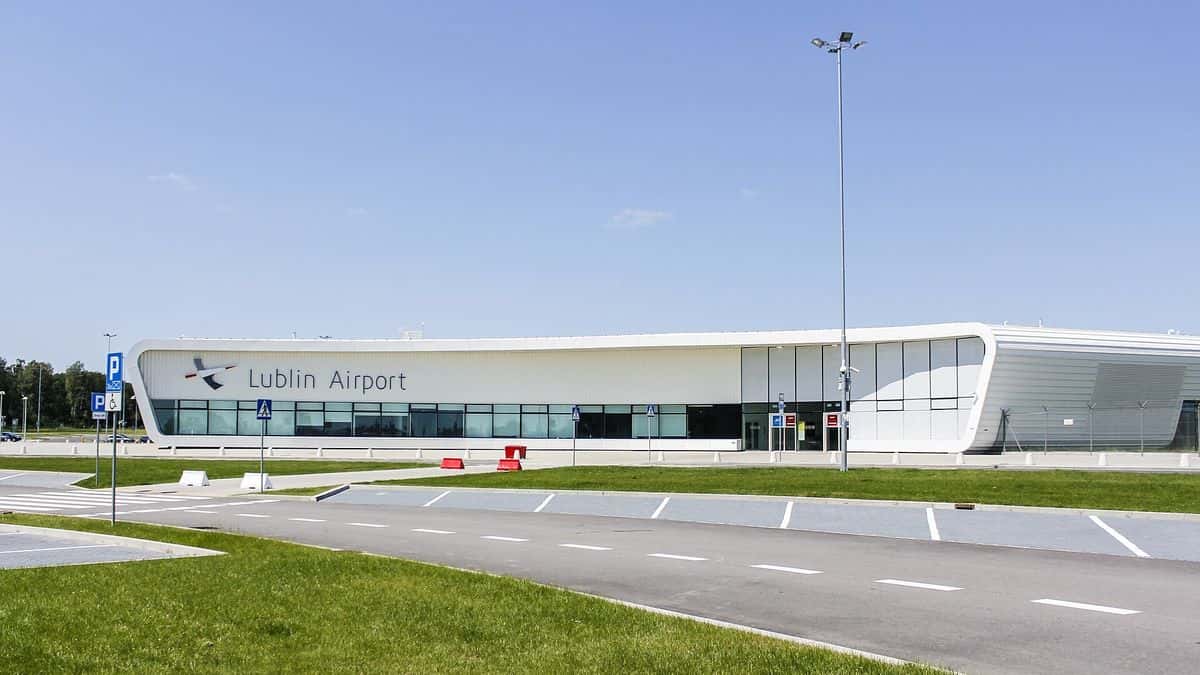
Parking at Lublin airport
Świdnik lies east of Lublin on the road towards Chełm, with one terminal and short approaches.
No car parks at Lublin airport yet
The first car park shows up here once an operator lists it. Directions to the airport are below.
Everything here works on a small scale: one terminal, short approaches and a handful of sites in the immediate neighbourhood.
How to reach Lublin Airport at Świdnik
Driving to Świdnik
One road serves the terminal, which keeps the geography simple: provincial road 822 runs directly from the terminal to the S12/S17 expressway junction roughly 8 kilometres away. Turn the other way along the same road and you reach central Lublin after about 10 kilometres; the centre of Świdnik is only 2.5 kilometres off.
The wider network matters more if your week involves driving around the region. The airport describes its position through four road numbers — the A2 motorway and the S12, S17 and S19 expressways — which puts the Warsaw–Lublin–Zamość axis and the Via Carpatia corridor through eastern Poland within reach of the same junction. Coming from Warsaw or from Zamość you leave the expressway on the eastern side of Lublin, with no city centre to cross.
Train and bus to Świdnik
Lublin was the first airport in Poland to open with a railway line leading from the terminal straight into the city. The Lublin Airport stop opened on 14 December 2012 and stands beside the building — the airport itself describes it as a few steps from the check-in desks. Trains use electrified line 581 from Świdnik Miasto; it is single-track, with two 149-metre single-edge platforms serving the same track.
Polregio sells the tickets and publishes the timetable, and the printed schedule is on portalpasazera.pl under the name Lublin Airport — check it before you travel, because the number of daily services has changed over the years. If the train does not fit your landing time, MPK Lublin bus 005 runs direct to Dworzec Lublin, where long-distance PKP trains connect.
Arriving via Sobieskiego street
Jana III Sobieskiego street was built specifically for the airport and feeds into road 822 — it is the last stretch of the drive in and the first metres of the drive out. A rank of recommended taxis waits in front of the building on the arrivals side, which is also where drivers meet passengers.
Cars left for the length of a trip stand at sites in Świdnik itself, among the town's streets, which you pass on the way to the terminal.
One terminal, a simple layout
The terminal at Świdnik is new and laid out without surprises: one door for departures, one way out of arrivals, and a forecourt right in front of the building. A shuttle stops a dozen paces from the entrance and picks you up in the same place on the way back.
That simplicity has a practical effect: you do not have to agree a terminal or a level, only an hour. Call for the transfer once you have your bag and the driver will be there before you are out of the door.
When to book at Świdnik
Traffic at Świdnik is seasonal and leans heavily on a charter network that changes from year to year. In summer, on the days with holiday flights, spaces go quickly, simply because there are not many sites here. Off season you will find one free even on the day you fly.
Since the choice is narrower than at the big airports, it pays to compare more than the rate. Check whether the transfer is included and whether it runs both ways — with few sites around, those details are what separates the offers.
Paying and booking
You pay for the booking online, at the moment you make it. BLIK, a payment card and an instant bank transfer are all accepted, the same methods you know from online shops. None of them costs more than the others, and there is no extra deposit collected at the barrier.
You pay the car park's price, with no booking or service fee. The price shown when you book is the final price for the whole stay. It covers the space and the transfer where the operator includes it in the rate; extra services are your own choice and appear as separate lines on the receipt. Once paid, you get an e-mail confirmation with a booking number, and that is your document on arrival.
Free cancellation runs until the cut-off set by the car park operator. You can see that cut-off on the car park's page before you pay. After a cancellation the money travels back the way it came, to the account or the card used at checkout.
What a secure lot means
"Secure" is a set of specifics, not a slogan. CCTV means cameras covering the bays, not just the gate. Fencing means an enclosed site with a controlled entrance. Lighting decides whether picking your car up at night is pleasant. The operator's policy defines what he answers for and what your own insurance covers, so ask about its scope before you leave the car.
Car keys are a separate question. Some lots ask you to leave them so they can shuffle cars on a tight site, others never touch the vehicle. Both practices are normal, but they differ in consequences: if the keys stay, take your documents and your garage remote out of the car, and leave the glovebox empty.
Getting the car ready
Take out everything valuable or personal: the laptop, documents, chargers, the road-toll device. In winter, top up the battery and switch to winter screen wash, because a car standing in frost for a week starts worse than one driven daily. In summer, park away from direct sun on the dashboard if the lot lets you choose.
Check your car's height if you drive a van, an SUV with a roof box or a bike rack on the roof. Multi-storey car parks at the terminals have a height barrier, and a taller car simply will not fit under it. Open-air lots off the airport grounds usually have no such limit — the car park's page tells you whether it is roofed or open.
Arriving at the car park
On arrival you give your booking number or show the confirmation e-mail. Staff note the registration plate, point you to a bay and, where the lot works that way, take the keys. It pays to enter the plate when booking, because then arriving comes down to the gate opening.
The transfer to the terminal usually leaves right after you park, and you order the return leg by phone once you have your luggage. The number is in the booking confirmation, and it is worth saving it on your phone before you fly, along with the site address — nobody wants to hunt through e-mail after a night landing.
Frequently asked questions
How do I get from Lublin Airport into the centre of Lublin?
The city centre is about 10 kilometres west of the terminal, and Świdnik's own centre only 2.5. By car it is provincial road 822 the whole way. By rail, the halt beside the terminal reaches Lublin Główny in 15 minutes on Polregio services. The bus alternative, city line 005, finishes at Dworzec Lublin, where long-distance trains depart.
Where do arrivals come out, and where should someone meet me by car?
There is a single passenger terminal, so arrivals leave through one hall and there is little to get wrong. The rank of recommended taxis stands in front of the building on the arrivals side, and that same frontage is where cars pick passengers up. Because the terminal handles four Boeing 737-800s at a time at most, the arrivals hall clears in waves rather than staying congested.
Do I need a hire car in eastern Poland, or is the train from the airport enough?
It depends where you are heading after landing. For Lublin itself the train covers the trip in 15 minutes and bus 005 reaches Dworzec Lublin directly, so a car adds little. For anywhere else in the region a car is hard to avoid: the A2 and the S12, S17 and S19 expressways all feed the junction 8 kilometres from the terminal, and distances between towns in eastern Poland are long.
Is it normal to leave a car at Lublin Airport for two weeks?
Yes, and the route network is the reason. Daily London flights with two carriers, along with Dublin and Maastricht, are visit-and-work routes, while charters to Turkey, Egypt, Croatia and Bulgaria are rarely shorter than a week. For long-stay parking of that length, check that a site is fenced, monitored and staffed, and between November and March whether covered spaces are offered.
When is Lublin Airport busiest, and how much time should I allow for the drive?
Summer, distinctly. June 2026 was the airport's record month with 61,794 passengers and 572 movements, ahead of August 2025 at 61,115, and about half the year's traffic falls in the second half. Charter departures rather than business travel create those peaks. On a July or August weekend, allow extra time on road 822 and for security screening in one check-in hall.